
Resources
Restroom checklist for Manteca facility managers
A printable guide to Manteca restrooms: the nightly baseline, the weekly rotation, deep work worth putting on the calendar and the six supplies that keep a room usable.
Request a quoteCall (209) 314-1460
Printable checklist
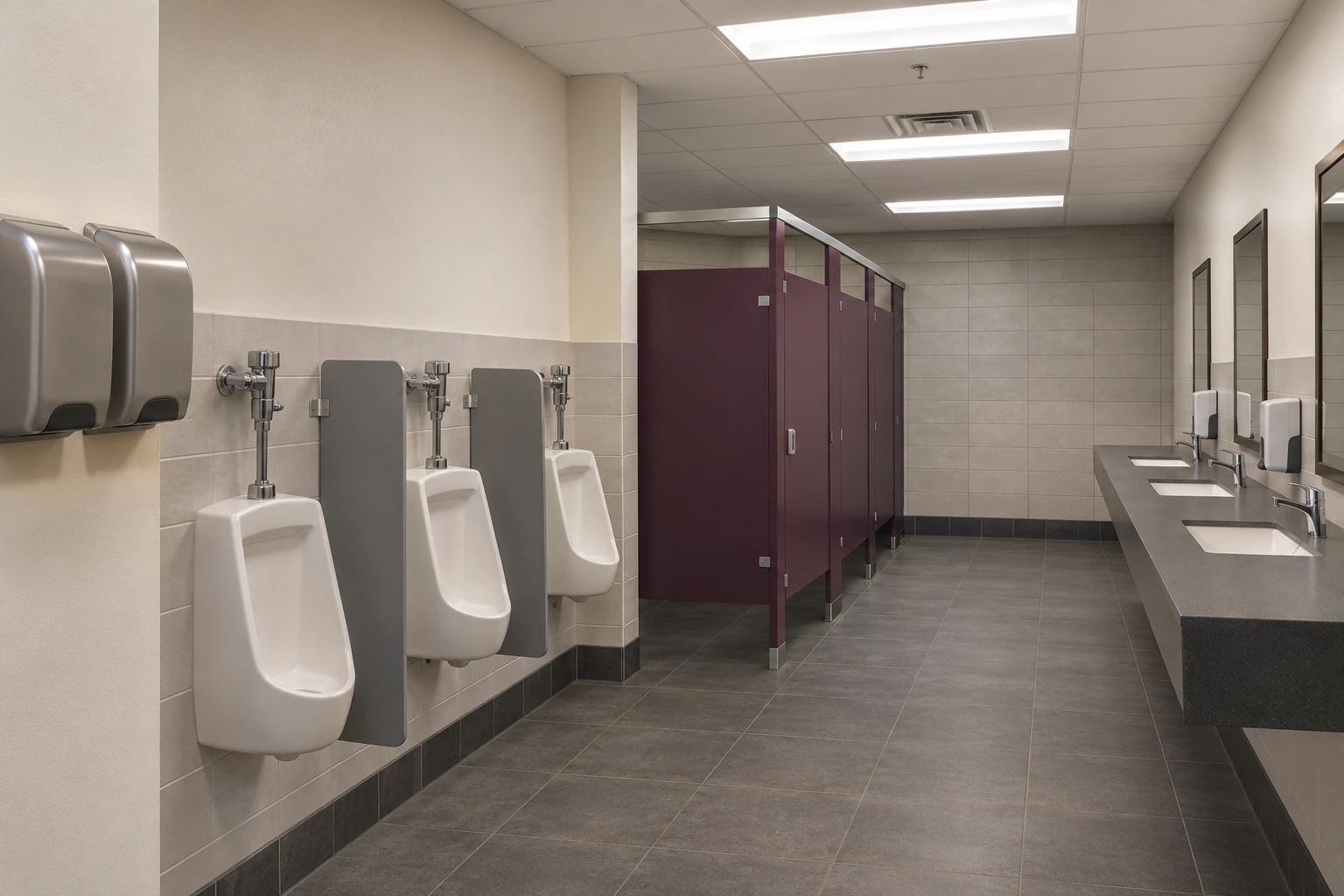
The room people judge you by
Visitors rarely comment on a clean lobby, but they remember a restroom with an empty roll or a sour smell. For a facility manager, that makes the restroom the room that gets the complaint emails. A checklist turns it into something you can measure: a short set of lines you can hold up against the room at seven in the morning and know whether last night’s visit landed.
This one is built for managers of offices, stores, schools, warehouses and multi-tenant buildings around Manteca. It splits restroom care into four parts: what happens on every cleaning visit, what rotates through the week, the deeper work that goes on the calendar, and the supplies that keep the room usable between visits. Download the PDF on this page and keep a copy by the restroom door or on your clipboard.
On every cleaning visit
These lines are the baseline. If any of them fail on a morning check, the room will draw attention by lunch, so they belong on the visit list for each night the crew comes in.
- Bowls, seats, urinals and the bases where they meet the floor cleaned
- Sinks, faucets and counters washed and dried, with no water spots
- Mirrors cleared of splashes and streaks
- Dispensers, hand dryers and stall locks wiped
- Door handles and push plates cleaned on both sides
- Floor mopped edge to edge, with extra attention at fixture bases
- Partition panels spot-cleaned at hand height
- Trash and sanitary bins emptied and relined
Disinfecting follows the cleaning, never the other way round: EPA-registered disinfectants go on the touch surfaces and fixtures and stay wet for the full contact time their labels list before anyone wipes them.
Restocking: the supply lines
Most restroom complaints are really supply complaints. Check these on every visit, refill them before they run low rather than when they run out, and keep a backup on the shelf so a busy day doesn’t empty the room.
- Hand soap in each wall dispenser or pump
- Toilet paper in every stall, with a reserve roll if the holder has room
- Seat covers stocked in each stall
- Paper towels loaded in each dispenser
- Hand sanitizer filled at the entry or by the door
- Can liners in every bin, with extras in the bottom of the can
Decide early who supplies these items. On a cleaning plan, the crew refills dispensers and the supply shelf on each visit, and our janitorial supplies service can deliver the paper, liners, soap, sanitizer and seat covers along with the dispensers that hold them.
Weekly detail work
The weekly pass reaches the spots a nightly clean moves past. Skipped for a month, they are where a restroom starts to look tired even when it is technically clean.
- Every partition panel and stall door given a full wash
- Grime line where the mop meets the wall scrubbed out
- Fixture bases and the floor behind toilets detailed
- Floor drains flushed with clean water
- Light scale touched up on faucets and flush valves
- Dispenser and hand dryer housings detailed
- Vent covers checked and dusted if needed
Periodic deep work
Some restroom work needs time and equipment that a nightly visit can’t give it. Book it on a calendar that matches traffic: a store or school restroom in steady use may need it monthly, while a single restroom in a small office can go a full quarter. Our restroom deep cleaning handles this on its own schedule, once the building closes or over a weekend.
- Grout and floor tile machine-scrubbed and the water recovered
- Built-up mineral scale lifted from toilets, urinals and sinks
- Floor drains cleared of buildup and scrubbed
- Wall tile and wainscot washed
- High edges above stalls and mirrors dusted and wiped
- Light covers and exhaust vents cleaned
- Baseboards and corners hand-brushed
Using the checklist between visits
The sheet works best as a habit. Walk the restrooms before the building fills, tick what passes and write down what doesn’t, with the date. After two or three weeks a pattern shows: maybe the second-floor men’s room runs out of towels by midafternoon, or one drain smells every Monday.
Those patterns tell you what to change. Supply that runs out during the day points to a porter visit, and a day porter can check and restock restrooms while you are open. A room that dulls between deep cleans may need a shorter interval. At warehouses and plants, restrooms near the time clock see the heaviest use at shift change, and our guide to support spaces around shift changes covers that timing. Supervisors check rooms against your visit list on quality inspections, and your dated notes give them a head start.
Common questions
Does a restroom need attention on every cleaning visit?
Yes, and for most busy buildings that means nightly. Restrooms set the pace for the whole schedule, and a room with heavy daytime use often adds a porter check on top.
Which supplies should we track for restocking?
Six items cover it: seat covers, hand soap, toilet paper, sanitizer, can liners and paper towels. Keep a small backup of each on the shelf so a busy day doesn’t empty a dispenser.
When does a restroom need a deep clean rather than a regular one?
When you see stained grout, scale at the fixture bases or a smell that returns soon after cleaning. Those come from buildup that a nightly visit doesn’t reach, and a scheduled deep clean clears it.
Can our facility team use this checklist for its own checks?
Yes. It is written for the manager walking the room, so anyone on your team can use it for a morning check. The PDF prints with space for the building, the date and the person checking.
Resources