Industries
Veterinary Clinic Cleaning in Manteca
Manteca Cleaning cleans animal hospitals and veterinary clinics after hours: the lobby, exam rooms, treatment and surgery areas, kennel wards, staff rooms and floors, following your practice’s own protocol.
Request a quoteCall (209) 314-1460
Printable checklist
What an animal practice asks of a cleaning crew
Around Manteca, veterinary care happens in neighborhood small-animal clinics set into shopping centers, full-service animal hospitals with their own surgery suites, and practices that run grooming or boarding next door to the exam rooms. Every one of them shares a problem that an ordinary office never has: patients who shed, drool, track in mud from the parking strip and sometimes have accidents on the way to the scale. Pet owners notice odor and hair long before they notice anything else, and the clinical side of the building has standards of its own. Manteca Cleaning works through both halves after the last appointment, so the front looks welcoming and the back is ready for morning surgeries.
Lobby, scale and the check-in counter
The waiting area takes the most visible wear. Crews vacuum hair out from under benches and along baseboards, clear nose smudges from the door glass and the bottom stretch of the storefront windows, and clean the floor scale platform and the floor around it. The reception counter, card reader, pens and the treat jar lid are wiped, and the retail shelves of food and supplies are dusted without moving the stock. Seating gets a wipe-down, including the legs and undersides where dogs like to sniff. Hard floors are mopped with fresh solution changed often, since a single bucket carried across a busy lobby only spreads what it picks up.
Exam rooms and the treatment area
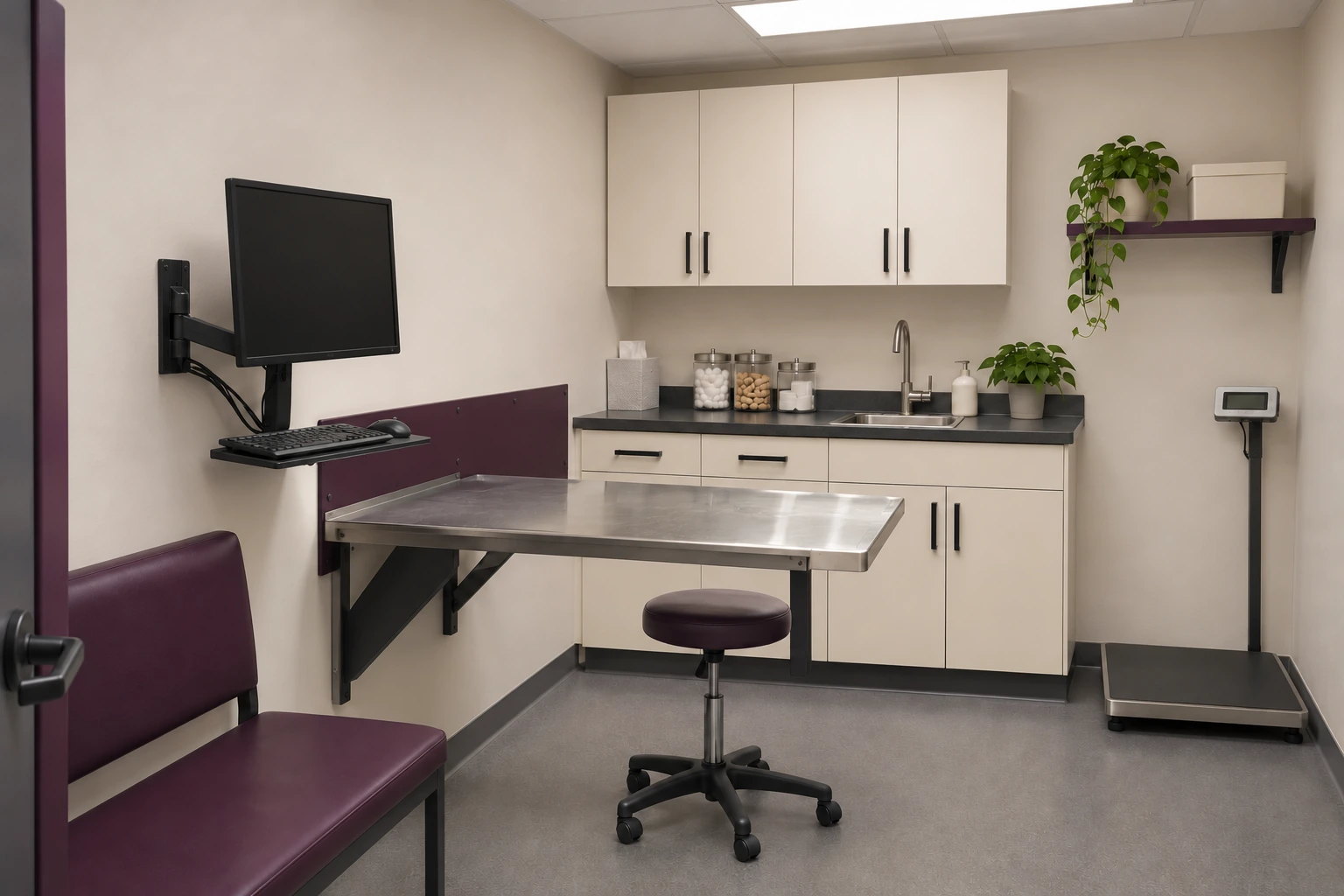
Your practice decides the sequence and the chemistry for each exam room, and the crew sticks to both. Tables, countertops, cabinet pulls, sinks, faucet handles, door levers and the stools vets roll between patients are cleaned, and high-touch spots get an EPA-registered disinfectant, applied and left alone for the dwell time its label calls for, then wiped. The treatment area behind the exam rooms, with its wet tables, procedure lamps and supply carts, is handled to the same written steps. Equipment and medications on the counters are not shifted; the crew cleans the bare surface around each item.
Surgery and dental suites can be given a terminal clean on the nights the practice books one, top to bottom: lights, walls within reach, cabinet fronts, tables, stools and the floor last. Every crew member has bloodborne-pathogen training before working in a clinical room.
Kennel wards, isolation and boarding rooms
Hospitalized and boarding animals mean wards that need care every night. Once staff have settled or moved the animals, crews wipe cage and run doors, latches and the outside of kennel banks, clean the ward sinks and counters, and mop the floor to the drain. An isolation room, when the practice has one, gets its own sequence and its own set of tools that stay in that room. Food prep counters, the dish sink and the walk-in supply room get their handles and shelves wiped. Wherever a protocol differs from room to room, the crew works from the practice’s written list.
Floors that stand up to paws and hoses
Hose-downs and constant mopping dull the finish fast, so exam-room and hallway vinyl gets a fresh strip and refinish through our commercial floor care, ward concrete gets machine scrubbed, and grout is scrubbed back to color. Carpet in a consultation or comfort room for end-of-life visits can be extracted to lift hair and odor. These visits are scheduled for a closed day or a quiet evening so the clinic opens on dry, clean floors.
Staff rooms, records and restrooms
Behind the clinical rooms is a small office full of people working long shifts. The break room counter, microwave, refrigerator handles and table are cleaned, the doctors’ offices are dusted and emptied, and staff and client restrooms are scrubbed and refilled with paper, soap and liners from our stock or yours. Patient charts, client files and workstation screens are left unread and untouched; HIPAA-aware training shapes how the crew behaves around records and monitors, here as in any medical office. A supervisor checks the work in person on a regular basis and passes notes to the practice manager.
Fitting in around a clinic’s hours
Most practices close in the evening and open early, and some see patients on Saturday mornings or keep an emergency doctor on call. The plan follows those hours: a full clean after closing on weekdays, a lighter visit after a Saturday half day, and a one-time deep clean whenever the clinic remodels or expands. Crews coordinate with any staff still treating hospitalized patients so wards are done when the animals are settled. After a free tour with your practice manager, you get a written quote that sets nightly rooms apart from the floor jobs booked a few times a year.
Common questions
Can you follow the cleaning protocol our practice already uses?
Yes. Send your written protocol and product list before the first visit, and the crew follows it room by room, including the order rooms are cleaned in.
Do crews clean while hospitalized animals are in the ward?
Yes, once staff have settled them. Crews work around occupied kennels quietly and leave latches and doors exactly as staff set them.
What happens to the pet hair and smell in the waiting room?
Hair is vacuumed from under seating, along baseboards and around the scale every visit, and floors are mopped with frequently changed solution. Carpeted rooms can be extracted on a set schedule.
Is a terminal clean of the surgery suite available?
Yes. It can be booked weekly, monthly or after a specific procedure, and it covers the suite from the overhead lights to the floor.
Can boarding rooms get a visit on weekends too?
Yes. Saturday or Sunday visits can be added for the boarding side, timed around the staff’s feeding and walking rounds.