
Services
Commercial High Dusting in Manteca
Commercial high dusting in Manteca for warehouses, plants, gyms, atriums and stores: lights, ductwork, beams, rafters and the tops of racking cleaned from lifts, scheduled around your operation and finished with a clean floor below.
Request a quoteCall (209) 314-1460
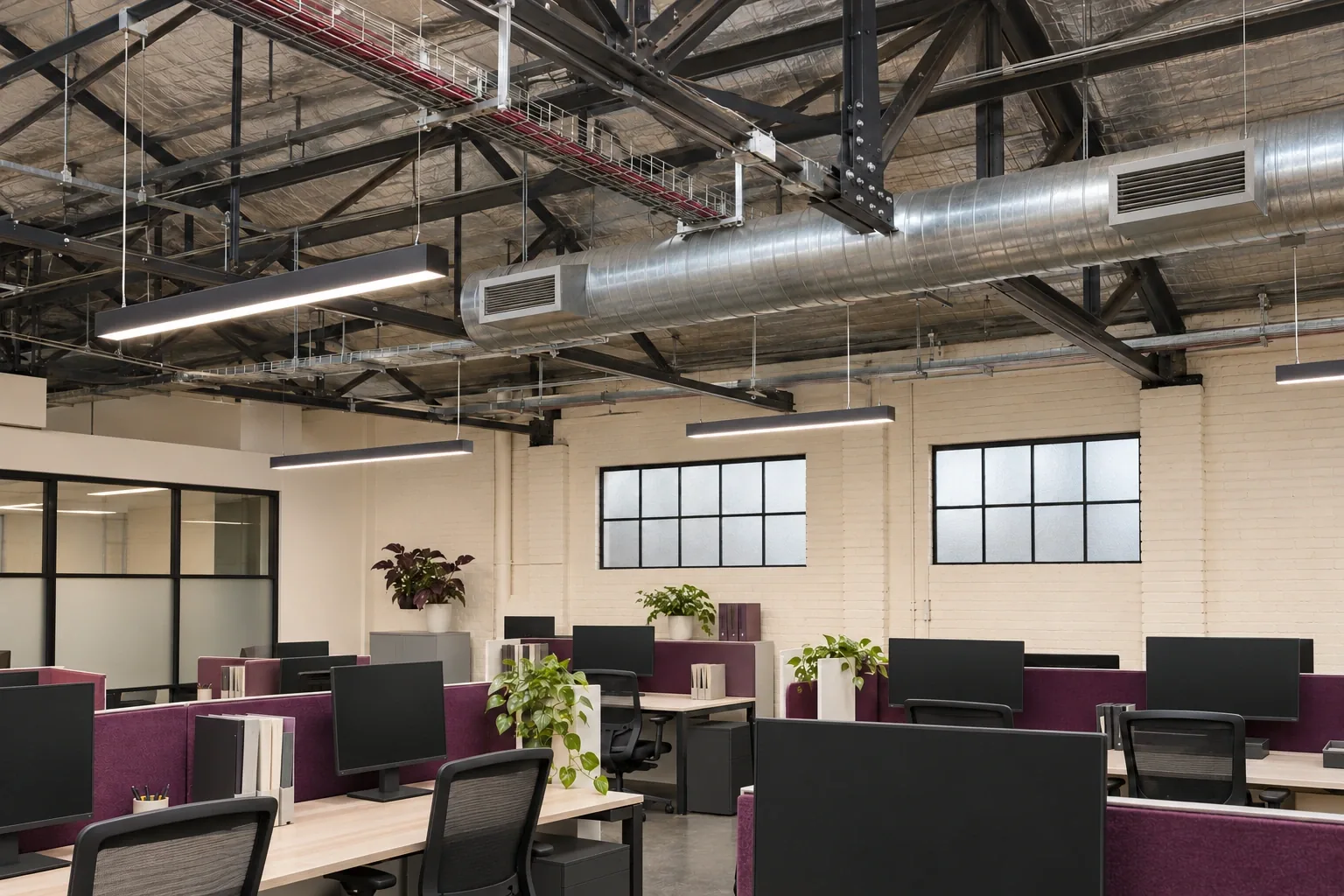
What high dusting covers in a Manteca building
High dusting is the removal of dust, cobwebs and debris from every surface above the reach of a nightly cleaning crew. In a tall building that dust builds up quietly for months on beams, pipes and light fixtures, until it starts drifting down onto stock, equipment and freshly cleaned floors.
Manteca’s mix of distribution buildings, food plants, manufacturing space, big-box stores and gyms with open ceilings puts a lot of surface area up high. Valley dust from the surrounding farmland adds to it every dry season, carried in through dock doors and roll-up doors that stay open through the working day. Manteca Cleaning schedules high dusting as a project of its own or as a regular line in an existing cleaning plan.
What gets cleaned up high
A high dusting visit works from the roof deck down. Open-web joists, rafters and I-beams are cleaned first, then the ductwork, diffusers and return grilles, conduit and pipe runs, light fixtures and lenses, hanging signs, ceiling fans and high window ledges.
In warehouses, the tops of pallet racking and high shelving are cleared of the dust and shrink-wrap scraps that collect there. In atriums and lobbies, the work takes in tall glass frames, ledges, decorative beams and suspended lighting, and in retail stores it covers the fixtures and signage above the aisles.
Working from lifts
High dusting in Manteca is done from lifts, so crews can reach rafters, beams, racking tops, ductwork, lights and high ceilings directly instead of swiping at them from the floor. The lift is positioned aisle by aisle, and each section is finished before the crew moves on.
Dust is vacuumed and wiped off rather than blown around, so less of it settles back on the surfaces just cleaned. Lift work is planned at the walkthrough around your aisle widths, floor loads and the areas that must stay open.
Protecting stock, equipment and the floor below
Before work starts overhead, product, open shelving, workstations and sensitive equipment beneath the section are covered with sheeting. Once the section is done, the covers come off carefully and the floor below is swept and cleaned, so nothing from the ceiling ends up in your stock or your workflow.
When the floor needs more than a sweep afterward, a machine scrub can follow through commercial floor care. In food plants, crews follow the facility’s own sanitation schedule, entry rules and covering requirements, which are written into the plan before the first lift goes up.
Scheduled around your operation
Distribution and warehouse buildings are usually done section by section on nights or weekends, so only the aisles being worked on close and everything else keeps moving. Manufacturing plants often put a full high clean into a planned shutdown or holiday week.
Gyms are dusted overnight or before the early crowd arrives, and stores after closing. A newly finished or remodeled building gets its first high clean as part of post-construction cleaning, before racking is loaded or the doors open.
How often high dusting should be done
The right interval depends on how dusty the building gets and what sits underneath. Food production and packaging areas typically need it most often, warehouses and plants commonly book it quarterly or twice a year, and offices, lobbies and atriums usually need it once or twice a year.
Buildings with dock doors open all day through a dry Valley summer collect dust faster than sealed space. After the first visit, the supervisor’s quality inspection shows how much came down, and the next interval is set from what was found.
What sets the price of high dusting
High dusting is quoted per building or per section. Ceiling height, square footage, how much racking and ductwork is involved, lift access and aisle widths, how much stock has to be covered, the hours available for the work and how often it repeats all shape the figure.
A free walkthrough of your Manteca building turns those details into a written quote, with the floor clean-down and any recurring visits listed separately.
Common questions
What counts as high dusting in a warehouse or plant?
It is the cleaning of surfaces above normal reach, such as rafters, beams, ductwork, pipes, lights and the tops of racking, to remove built-up dust and cobwebs before they fall onto stock, equipment and floors.
How often does a Manteca building need high dusting?
Food and packaging areas usually need it most often, warehouses and plants commonly book it quarterly or twice a year, and offices and atriums once or twice a year. Your first visit shows the right interval for your building.
Which surfaces up high get cleaned on a visit?
Joists, rafters and beams, ductwork and vents, conduit and pipe runs, light fixtures, signs, ledges and racking tops, plus covering what sits below and cleaning the floor afterward.
Will dust fall onto our inventory?
Stock and equipment under each section are covered before work starts overhead, and the covers and floor are cleaned once the section is finished.
Can high dusting happen while our warehouse is running?
Yes. Work moves section by section, so only the aisles under the lift close and operations continue everywhere else, or it can all be done on nights and weekends.